
LinqAlpha, LG AI Research, and LSEG co-host the AI for Finance Summit Seoul, sponsored by AWS and Google.
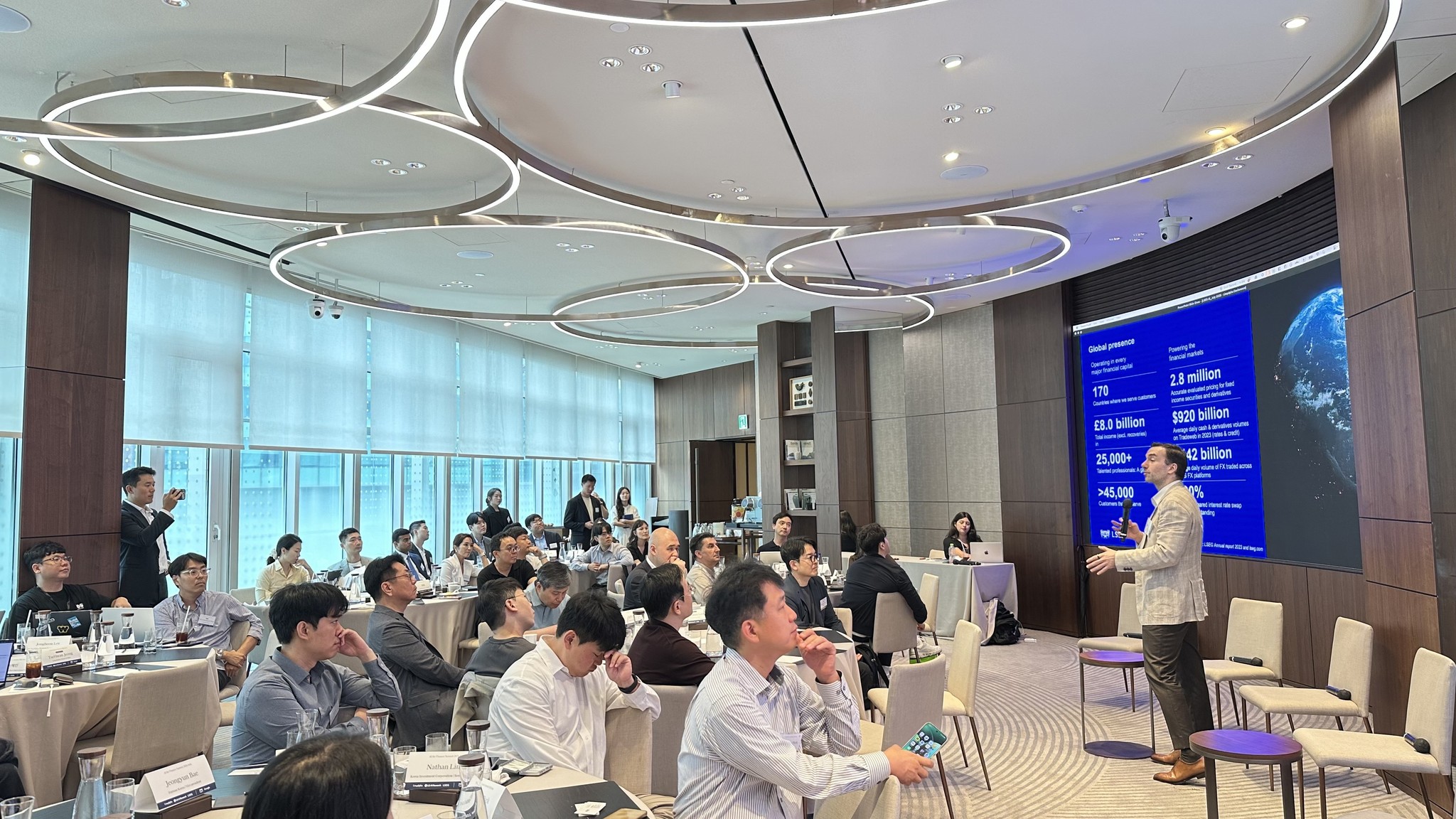
We co-hosted the AI for Finance Summit Seoul with LG AI Research and LSEG on July 10, during ICML week. The day gathered around 100 senior practitioners and 24 speakers for two firesides, five panels, and three live demos, held in English and Korean. The premise was simple: put the people writing frontier research papers and the people running Asian institutional capital in the same room and trace the stack from market foundation models to the production systems inside the region’s largest firms.
A series of core tensions between the frontier and the floor emerged from the dialogue.
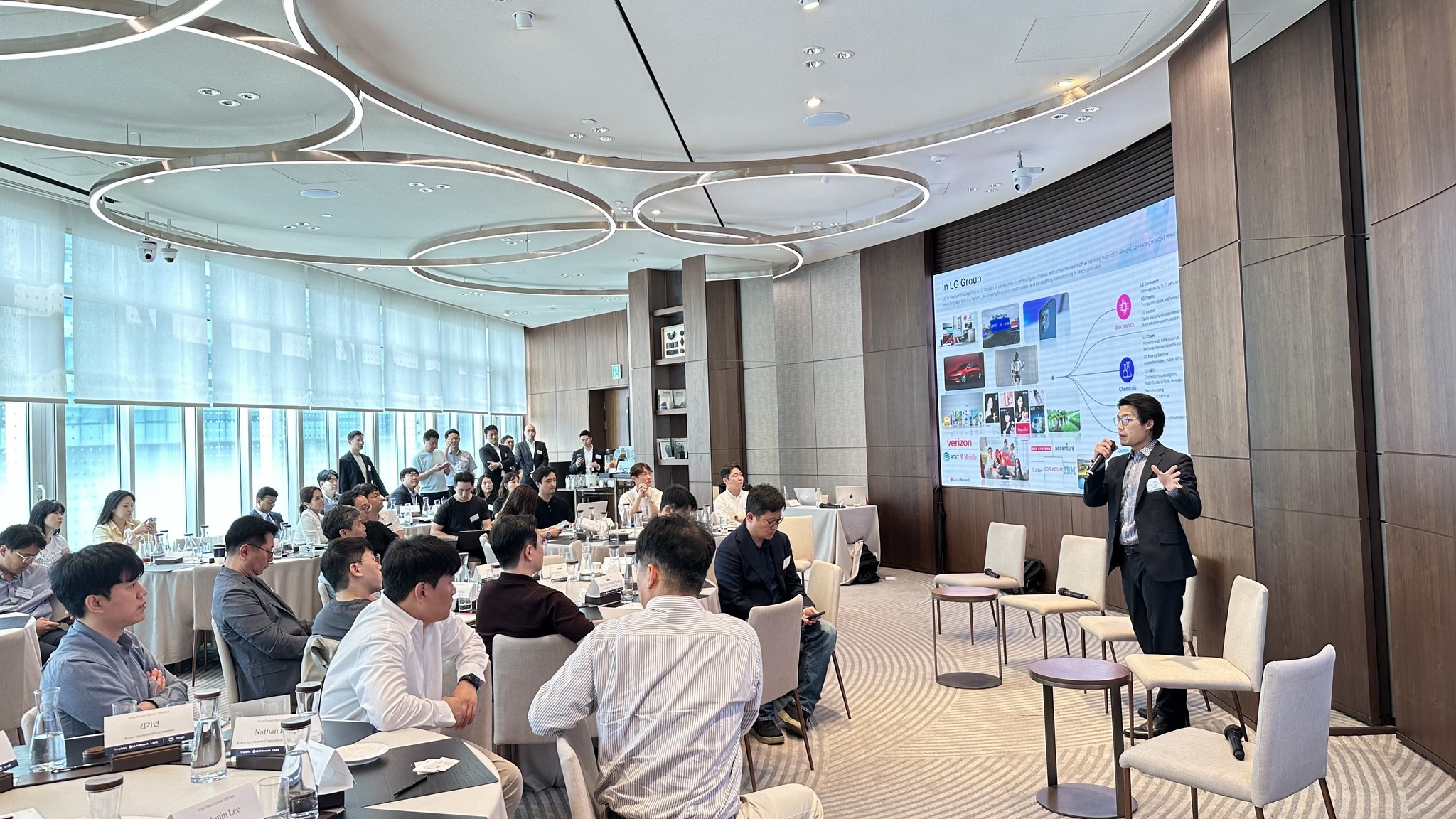
The first is that there will be no GPT-3 moment for markets. Generalization in an interactive market is transient by construction, as a strong signal eats the inefficiency it exploits. Signal half-life has collapsed from months to weeks to seconds, which is why continual learning, not one great pre-train, is the agenda.
Second, verification is the new bottleneck. Capability has outrun reliability. Generating output is now cheap, but the work has moved to verifying it, whether in code, alt data, or agent workflows. This is the research problem.
Third, the focus is shifting to governing the runtime, not just the model. The emerging pattern is a finite-state machine where the model proposes and a verification layer disposes. The harness, not the base model, becomes the object of testing, letting firms swap models underneath freely.
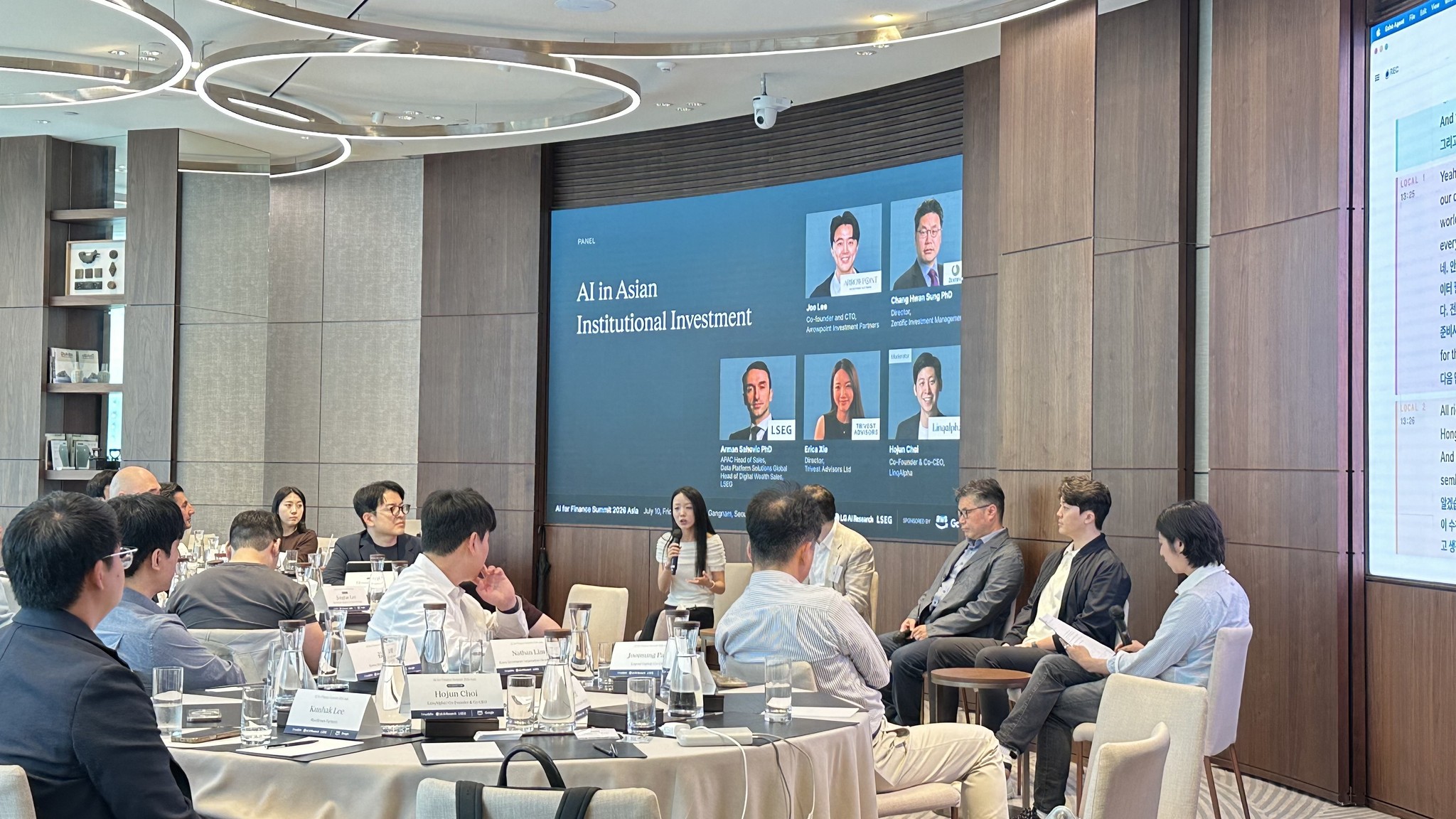
Fourth, the AI agenda has moved from the lab to the CEO and the board. Central teams are now enablers, not just builders, unlocking safe environments for practitioners. A common story: an AI budget exhausted by March is now read as a sign of adoption success, not an overrun.
Fifth, domain models begin where LLM semantics end. The consensus was to start from an LLM when the signal lives in language, like news and disclosures. But for causal, numerical structure like market microstructure, pre-training from scratch wins because that world was never in the LLM’s training data.
Sixth, Asia’s fragmentation is the tax, and AI is the rebate. The language barrier that handicapped regional quant research for a decade is gone. Interpretation, not just access, is the new differentiator, as real-time translation closes the information asymmetry for everyone from institutional to retail.
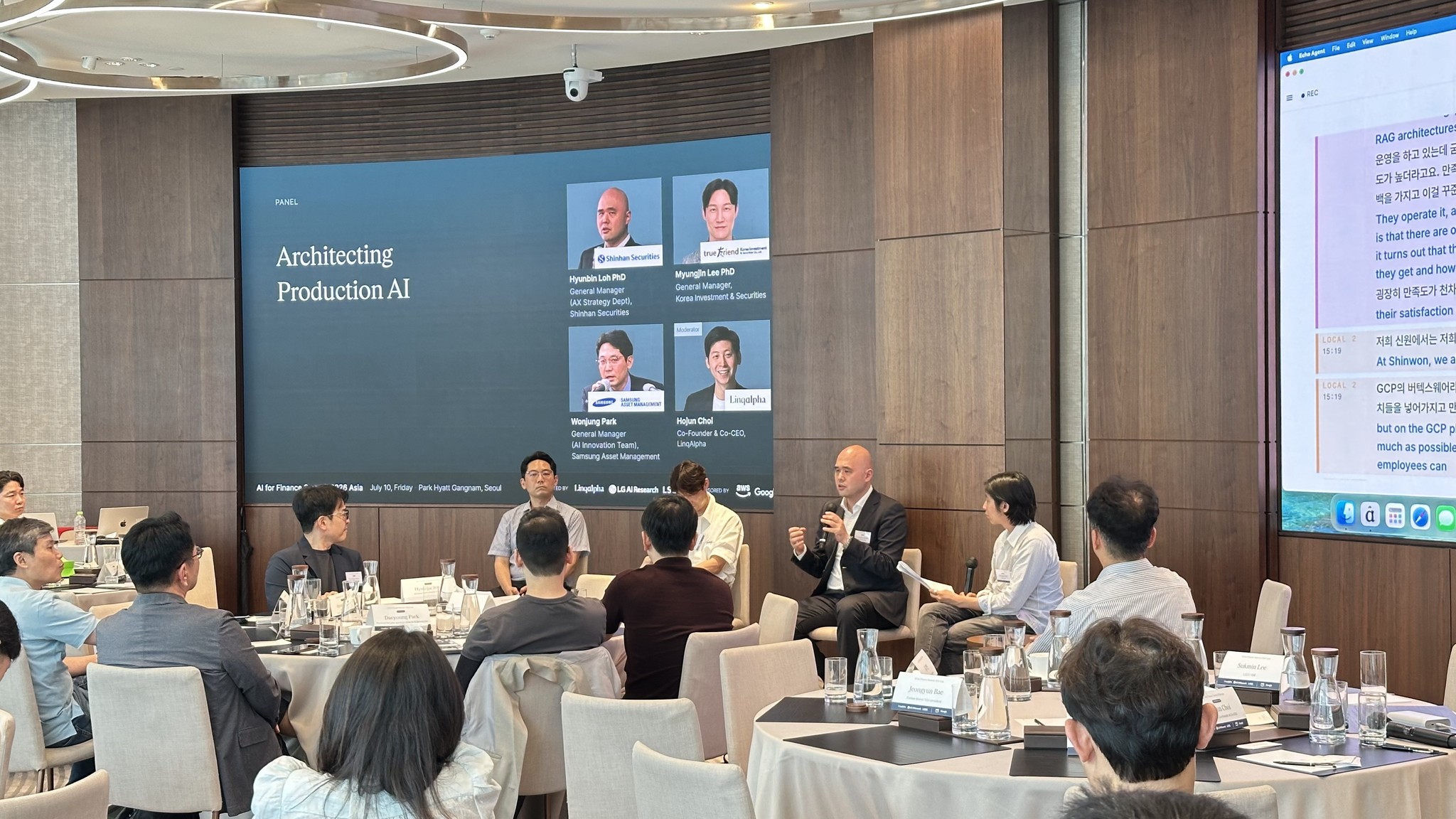
Three live demos traced one stack end to end: the data layer, the research layer, and the forecasting layer. The through-line was that owning data is no longer the edge. Even the largest clients touch less than half the data they already subscribe to; the constraint is friction, not appetite.
Governance frameworks still assume human review, yet the room agreed that output volume already exceeds it. As liability migrates to the firms deploying AI, and with at least one firm planning a department staffed entirely by agents, the open question remains: can accountability follow an org chart that has no humans in it? Seoul proved the premise that putting frontier research and institutional practice in one room makes the research-to-production gap the agenda itself. The dialogue compounds across editions.
Learn more at linqalpha.com or contact support@linqalpha.com.